


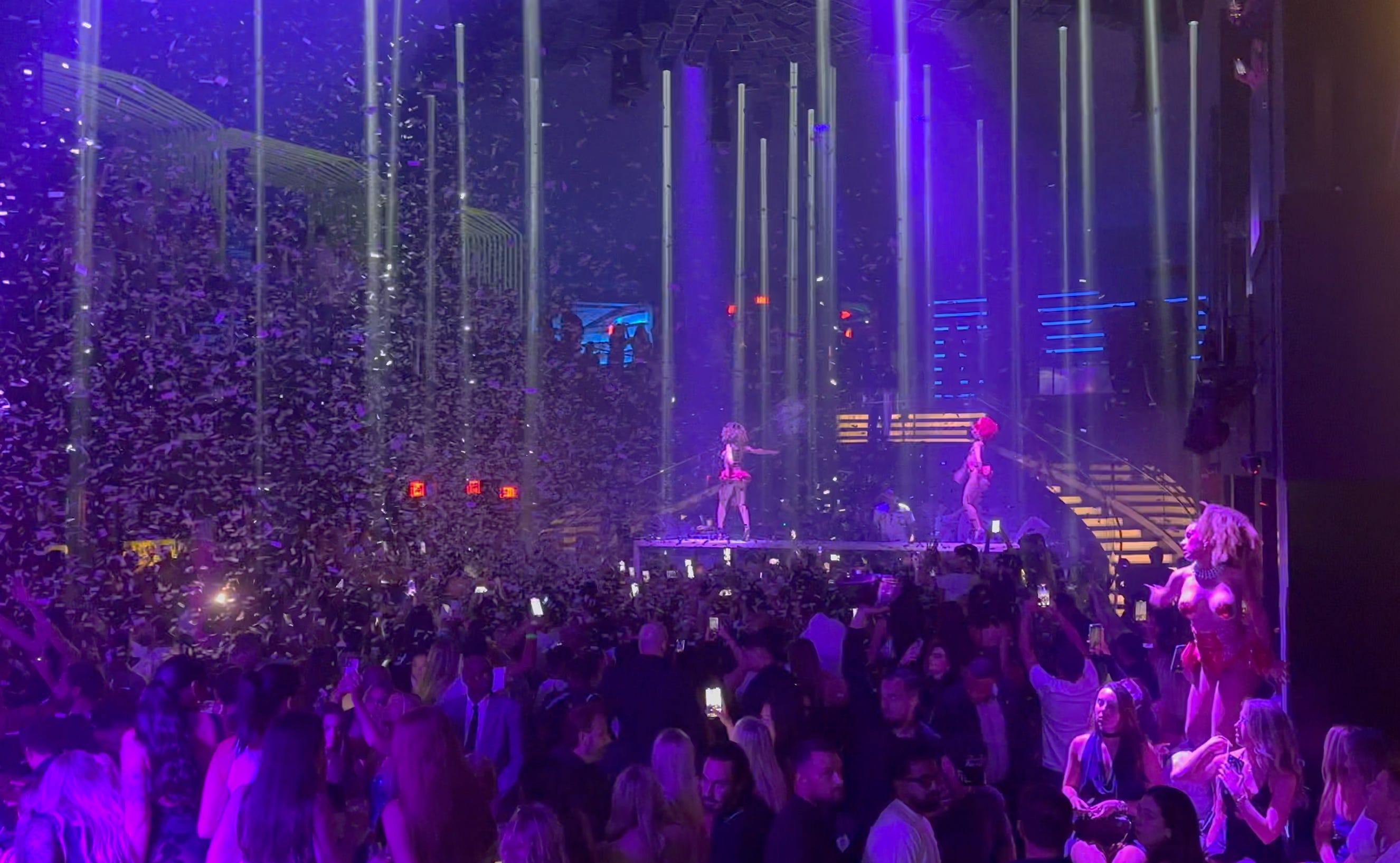
I suspect nightclub lighting is a bit like a masquerade party.
Sure, at a masquerade party your identity is hidden. But in my experience, everybody mostly knows who everyone is anyway. What’s really missing is the emotions.
Rather than wearing them on your sleeve, you become mysterious. Cooler than usual. Implacable around the person you secretly desire, for example.
Nightclub lighting may do something similar, but spectrally.
The monochromatic colored lighting common in clubs can largely eliminate our color vision’s ability to read emotions from bare skin — a function of color vision I proposed two decades ago. Blushes, blanches, flushes, and other blood-driven color changes are among the honest signals our visual system is tuned to detect.
Your facial expressions may still be visible under club lighting. But you have considerably more voluntary control over those.
You don’t have the same control over the blood beneath your skin.
So nightclub lighting may provide cover specifically for the signals that are hardest to fake.
A masquerade hides the face. A nightclub creates a kind of spectral masquerade: you remain recognizable, your expressions remain partly readable, but one of the most involuntary channels of emotional communication is switched off.
And that may be exactly what the setting calls for.
Nightclubs are places where people flirt, posture, approach strangers, risk rejection, conceal attraction, manufacture confidence, and try to seem a little less affected than they really are.
In ordinary daylight, your skin may betray you.
Under nightclub lighting, it can’t.
The lighting lets everyone become a little more mysterious, a little cooler, a little more implacable — and, in a very particular sense, a little more dishonest.