


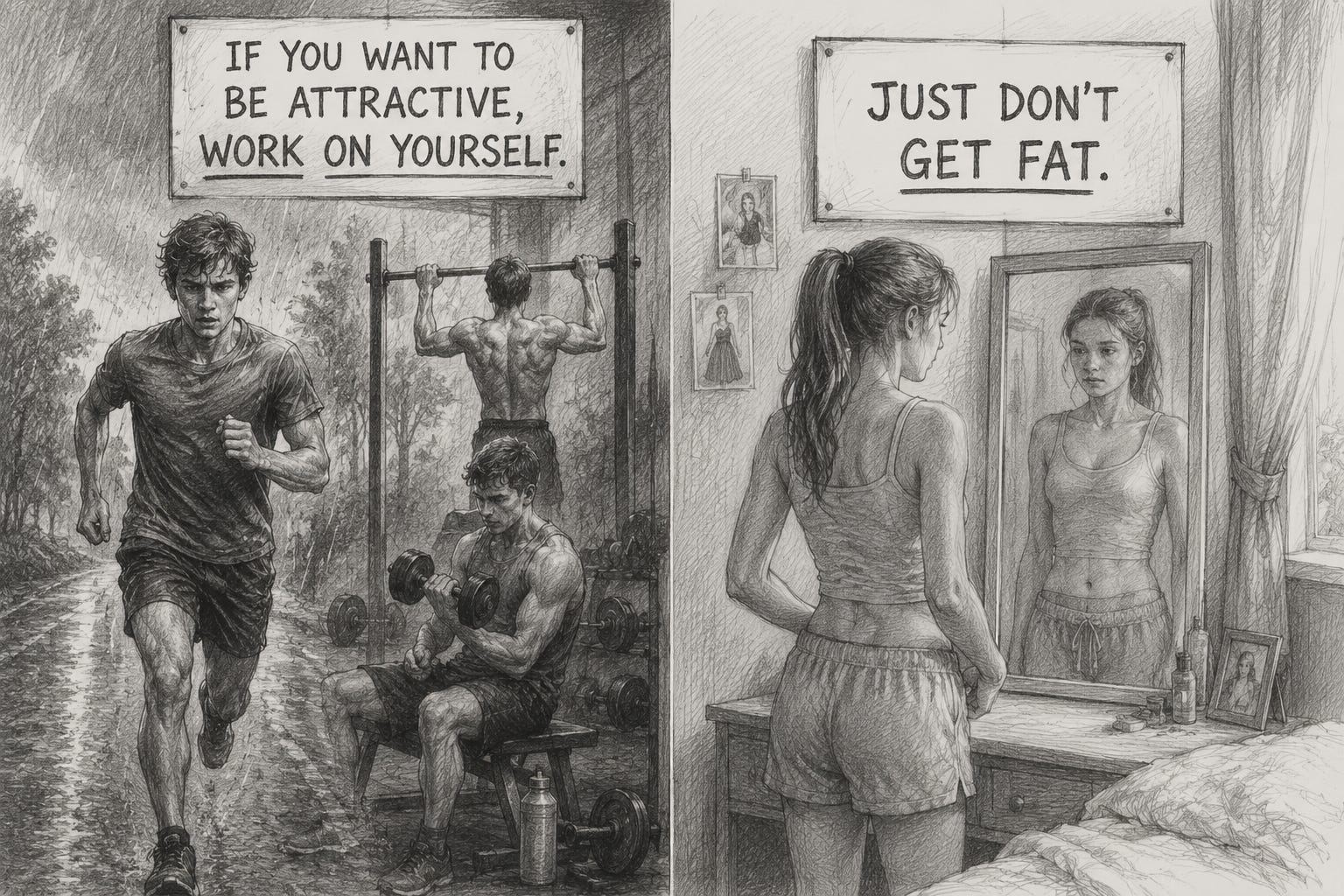
One of the biggest misunderstandings about attraction is the belief that men’s attraction to women is mostly about thinness.
It’s not.
Thinness matters. But thinness often arrives bundled together with a whole collection of other traits people find attractive: toned muscles, firm skin, energy, vitality, health, and the general appearance of youth.
The mistake is assuming thinness is doing all the work.
A 23-year-old woman who is thin is generally considered attractive by most men. But she doesn’t merely look thin. She also looks youthful. She doesn’t need to spend hours in the gym to appear toned, vibrant, and energetic because youth itself provides many of those qualities for free.
Not so for a young man. Men quickly learn that being merely thin isn’t enough. Women tend to find athletic men more attractive, so men are pushed toward exercise from an early age.
Fast forward twenty years.
Many women are surprised when the attention they once received begins to fade. They may still be thin, but some of the markers of youth are no longer there. Arms begin to soften, cellulite appears, skin loses some of its glow, and overall vitality diminishes.
But it was never just about being thin.
It was about looking youthful.
At 23, a woman is toned and radiant largely because she is young. Youth itself does much of the work.
Meanwhile, because men were taught that attractiveness requires effort, many continue exercising for decades. By their forties, they are often not merely thin, but muscular, energetic, and retaining many of the visual cues associated with youth.
Why are men disproportionately attracted to younger women?
Yes, evolution plays a role. Reproductive potential matters. But we’re not attracted to age itself. We’re attracted to the visual and behavioral cues that correlate with youth.
The irony is that modern culture strongly encourages men to maintain those cues through exercise and fitness.
But it often encourages women to believe that staying thin is enough.
Then, years later, we complain that society treats aging differently in men and women, without acknowledging that men and women have been receiving very different messages about maintaining youthfulness all along.
Perhaps some of the asymmetry isn’t that men age better than women.
Perhaps it’s that men were trained to work at it, while women were taught that they wouldn’t need to.