


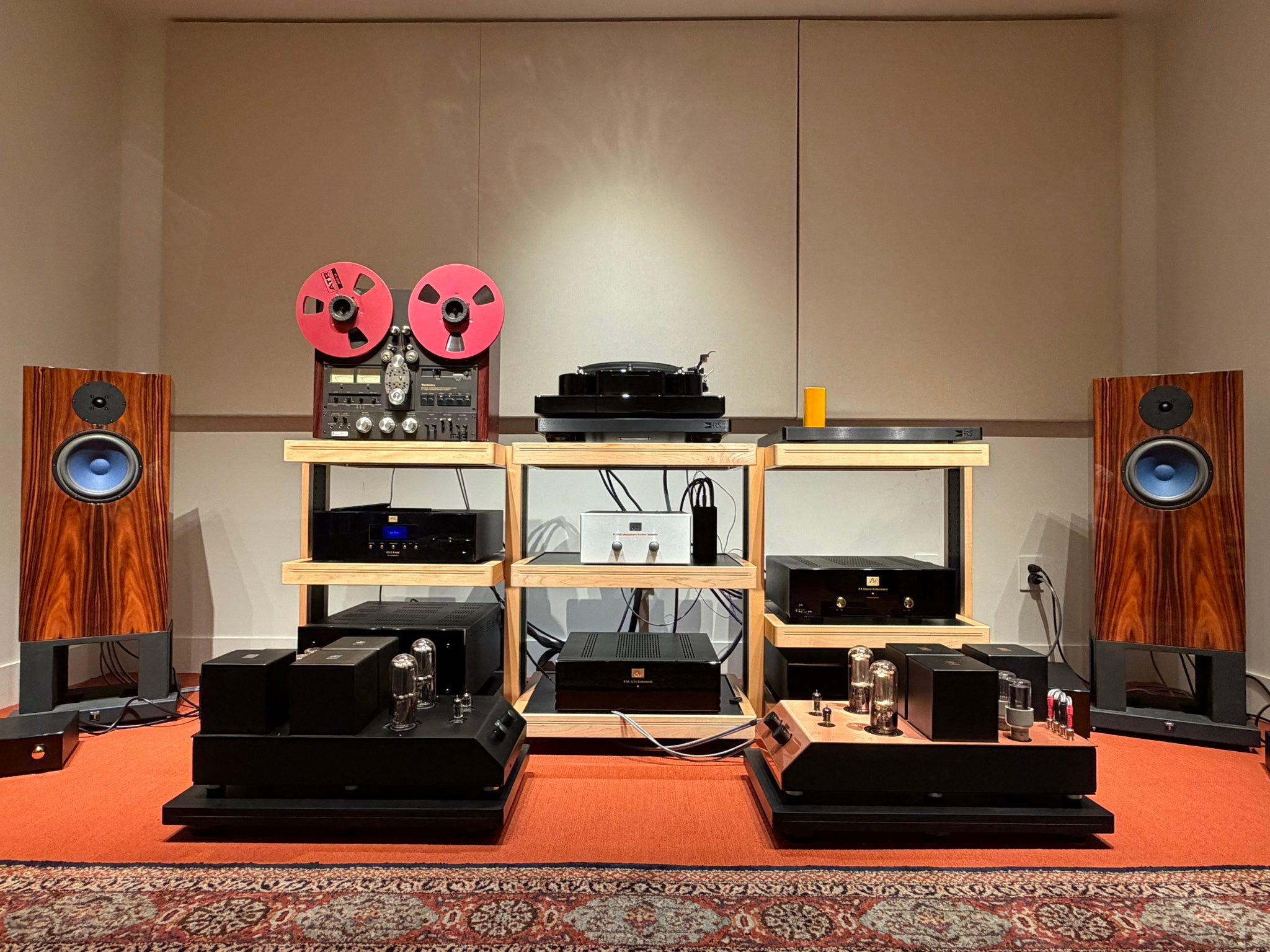
Last night I was invited to Sound Lux Audio Studio in Miami, set up by Eric Gould—a space devoted to cutting-edge, old-school audio where you can hear LPs and original master recordings the way they were meant to be heard. We listened to the master cut of The Dark Side of the Moon by Pink Floyd—a stunning, almost time-travel-like experience. The level of care is extraordinary: every detail tuned to faithfully project one fleeting slice of sound from a studio long ago.
But something struck me while sitting there.
All this obsessive care about auditory “snapshots” of the past… applies to just ONE peculiar kind of sound humans make: music. And only music.
For visual snapshots, we love everything. We pore over photos of friends and family moments, childhood memories, weddings and celebrations, street scenes and daily life, historic events, portraits of strangers, travel scenes and cityscapes, candid awkward tender and mundane human moments.
But for auditory snapshots? We are almost entirely uninterested in hearing friends and family conversations, childhood voices, wedding chatter and ambient noise, street sounds and daily life, historic speeches beyond a few iconic cases, strangers talking, travel ambiance, candid awkward tender mundane moments, laughter, arguments, small talk, storytelling.
No. As I realized last night, the walls were filled with albums. The auditory past we care about is almost exclusively music—a bizarre cultural construct that, on the face of it, tells us… nothing about history at all.
And yet, it completely dominates.
Why?
This is part of the deeper mystery of music. It crowds out nearly all other auditory history—even though those other sounds are far more directly about real events, real people, real lives.
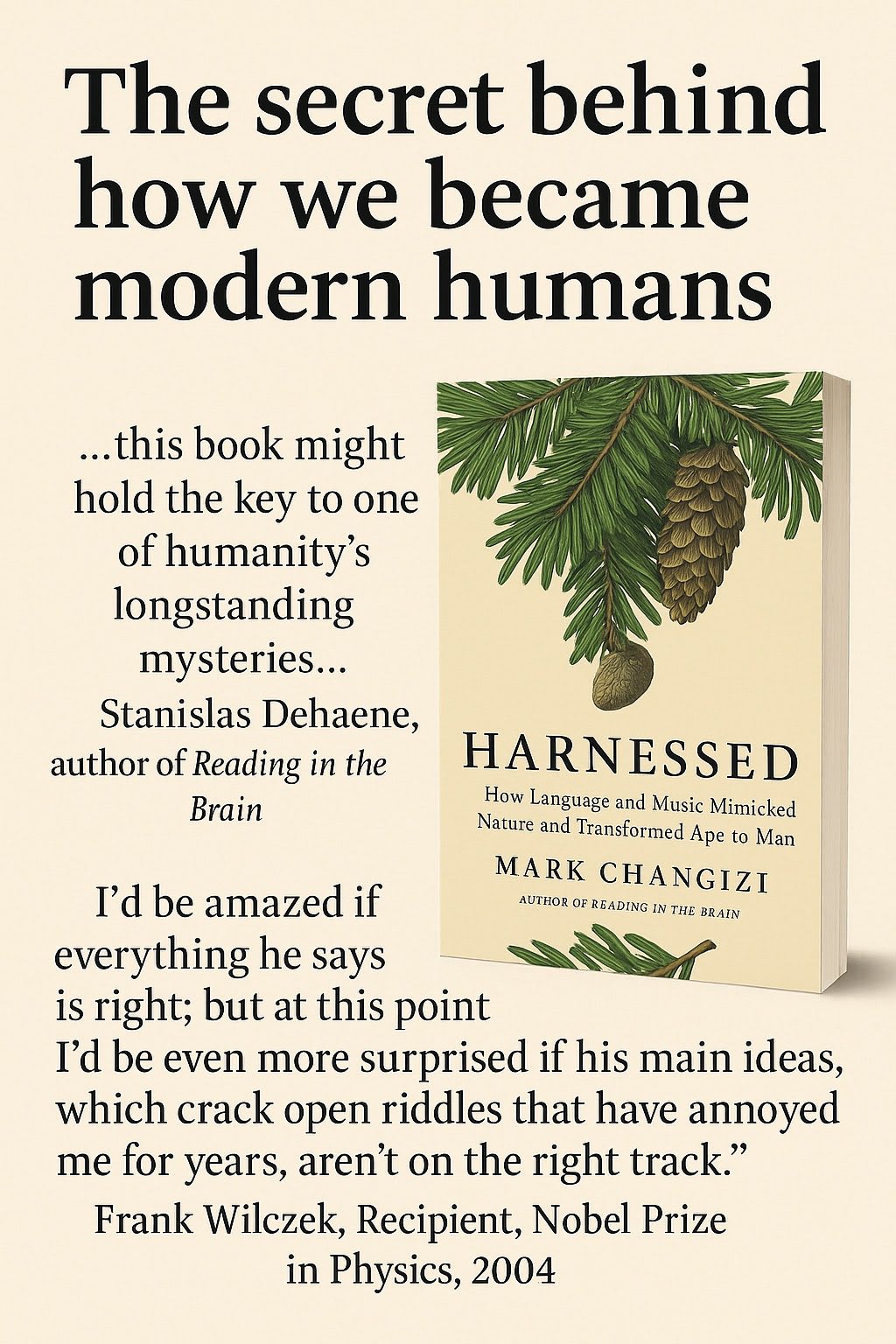
As many of you know from my earlier work and my book Harnessed: How Language and Music Mimicked Nature and Transformed Ape to Man, I’ve argued that music isn’t some abstract mathematical artifact. It has culturally evolved to sound like people—specifically, like a person moving evocatively in your midst. Human movement has a characteristic auditory grammar, and music mirrors it.
So yes—we may only be interested in one kind of auditory snapshot. But that kind is not alien at all. It’s deeply, inextricably human.
We don’t obsess over high-fidelity playback just to “hear the notes.” We do it to be more fully swept into the presence of a depicted mover—to feel them, as if they’re there with us.
And that’s why music, alone among sounds, gets preserved, polished, and revered.
More on this in Harnessed—and in ongoing work on the movement meanings of chords and chord progressions
.