


If you topple a dictatorship but the population is still drinking the Kool-Aid — that is, there’s real totalitarianism, authoritarianism enforced bottom-up — then nothing is likely to change.
For much of the last 46 years, Iran fit that description. Enforcement was not just official or top-down. It was ordinary people on the street: snitching, shaming, confronting, and policing one another.
The majority, meanwhile, kept their heads down — not because they believed, but because they lacked confidence. Each person feared being the lone dissenter. The prisoner’s dilemma held.
Over the last year, however, the majority have broken that dilemma. It is no longer merely that most Iranians oppose the regime; it is that they now know that others know this too. This “mutual knowing” — the confidence of not being alone — is what allows people to speak out, and to do so together.
As a result, the situation has shifted. What was once cultocratic — bottom-up intolerance paired with top-down authoritarianism — is now more simply top-down authoritarian. The regime remains dangerous, but many of its supporters now know to keep their mouths shut, because the majority is confident and will push back when Basij or morality police are not nearby.
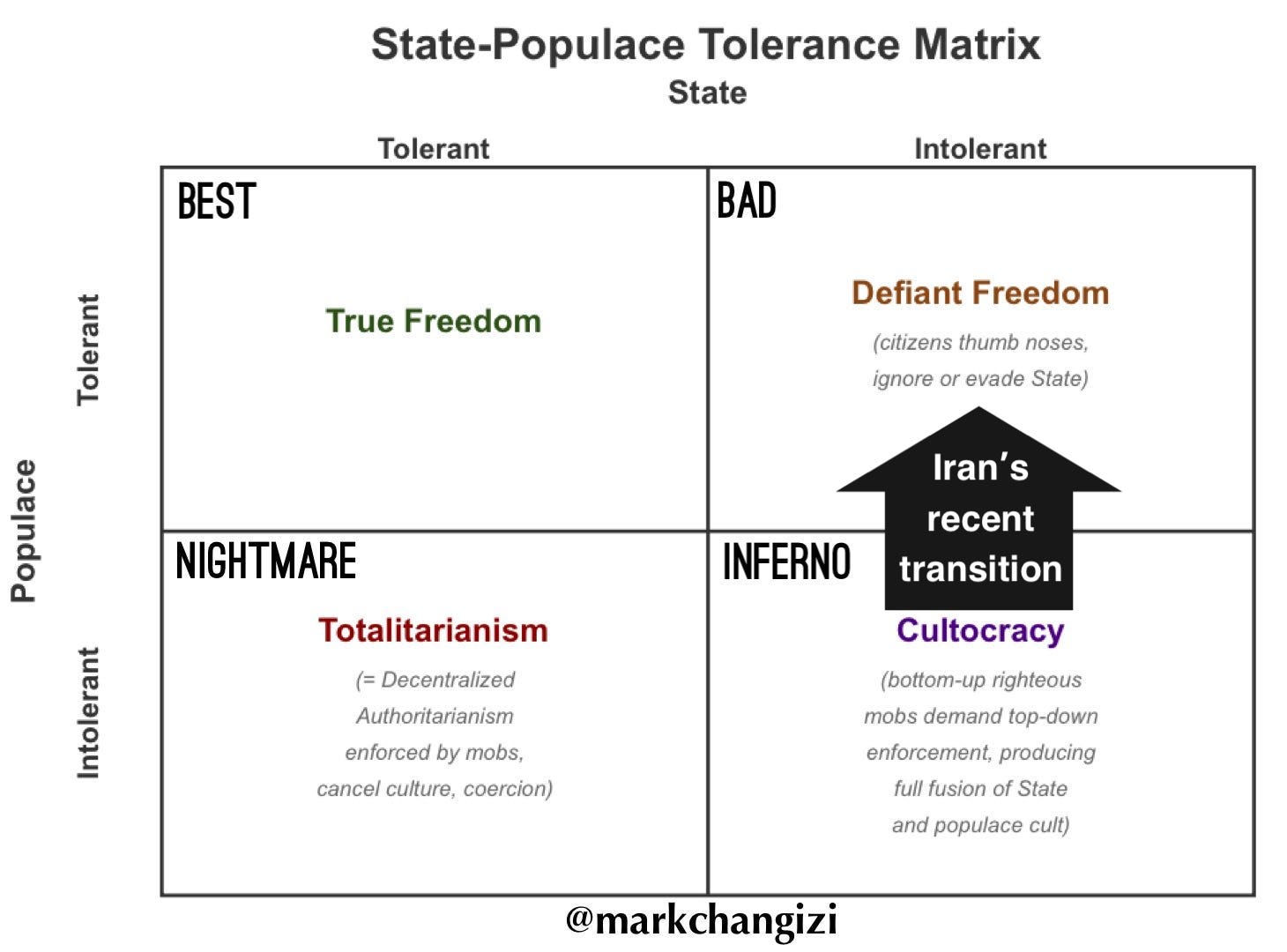
This makes the regime far more fragile. It has moved from the bottom-right of the matrix (“cultocracy”) to the top-right (top-down authoritarianism). And that is a much less stable place to be.
More info about the State-Populace Tolerance Matrix
State tolerance is important, but the real game changer is having a tolerant populace

The State–Populace Tolerance Matrix helps us think clearly about what sustains or destroys freedom. It maps societies along two axes: how tolerant the State is, and how tolerant the people are. The horizontal axis runs from tolerant governments on the left to intolerant ones on the right. The vertical axis runs from tolerant cultures on top to intoleran…