


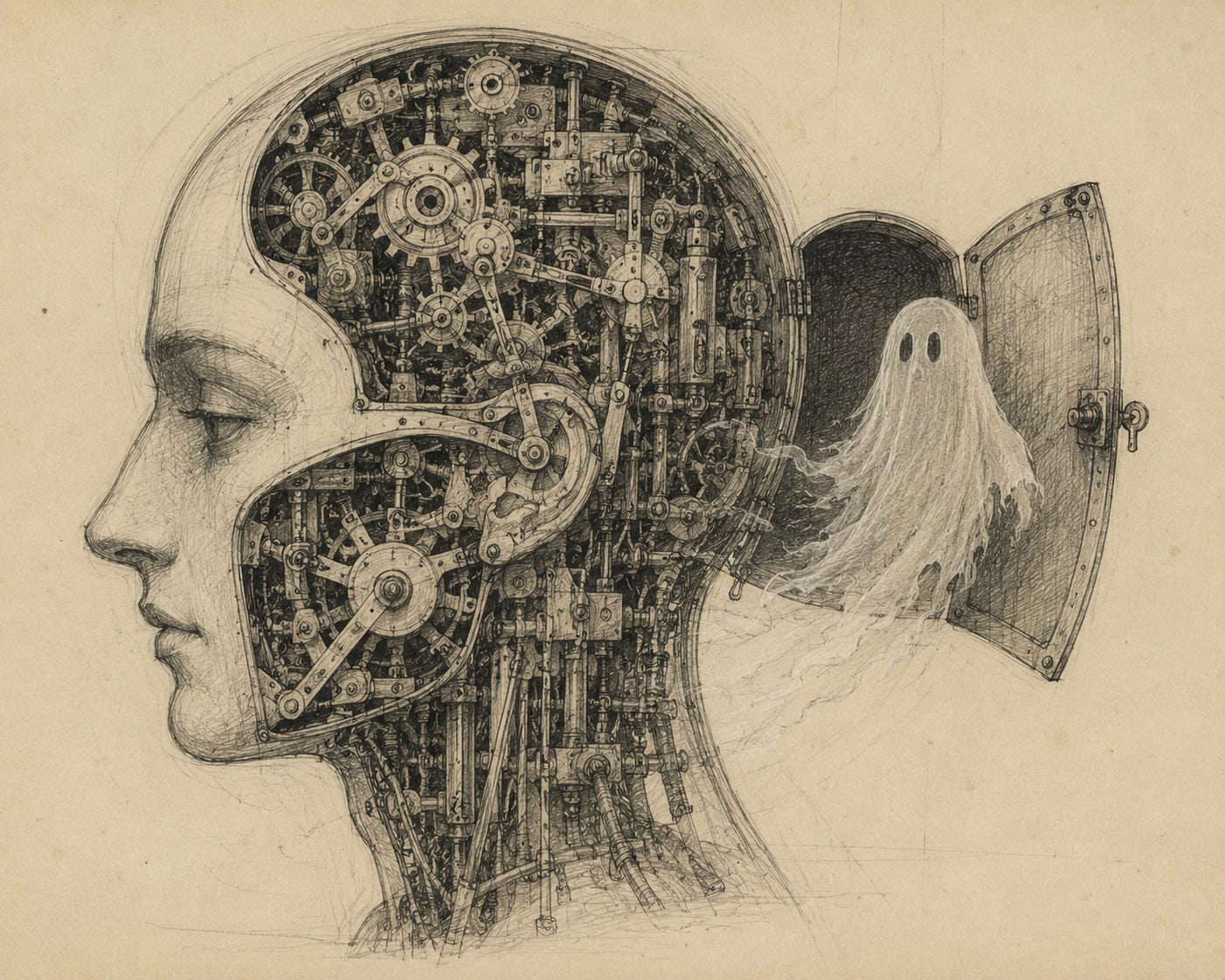
Intelligent Design is widely regarded as an embarrassing cautionary tale about human reasoning. Yet the same pattern shows up almost everywhere. Again and again, we accept that a complex, decentralized, emergent process explains most of what we observe — until it produces something we find especially remarkable. At that point, we decide the process cannot possibly be enough, and conclude that something more must have been added.
~ Intelligent Design
Natural selection explains adaptation and ordinary evolution — but it cannot explain the bacterial flagellum, the vertebrate eye, human intelligence, and other seemingly irreducible biological innovations. There must have been a designer.
~ Central Planning
Markets can coordinate ordinary production and exchange — but surely an advanced economy’s most important sectors are too complex and consequential to be left to decentralized prices and decisions. There must be expert planners directing the crucial outcomes.
~ Conspiracy Theories
History unfolds through countless interacting people, institutions, incentives, accidents, and feedback loops — but events this consequential, or this seemingly coordinated, cannot have emerged on their own. There must be a hidden cabal.
~ Truth and Knowledge
Open inquiry, criticism, replication, and debate can uncover many truths — but surely they cannot be trusted on the most important or dangerous questions without authoritative institutions and fact-checkers deciding what is reliable. There must be arbiters standing above the debate.
~ Metaphysical Free Will
The brain deliberates, weighs reasons, and generates behavior — but that cannot really account for genuine choice. There must be a steerer behind the deliberation, somehow able to go beyond what the brain’s mechanisms and the laws of physics would otherwise produce.
~ The Hard Problem of Consciousness
The brain perceives, integrates information, remembers, attends, and reports — but that cannot really account for subjective experience. There must be a watcher behind the processing, somehow possessing a “what it is like” that goes beyond anything the brain’s physical and functional organization entails.
~ Human Uniqueness — Against Zoocentrism
Ordinary primate cognition, harnessed by cumulative cultural evolution, explains much about humanity — but it cannot explain language, music, mathematics, religion, science, and civilization. There must be something uniquely human that was added, whether a special package of human instincts or, paradoxically, a uniquely unconstrained blank slate.
The recurring intuition is always the same: the accepted decentralized mechanism explains ordinary cases, but cannot possibly be sufficient for the truly extraordinary ones. So we conclude that something special must have been added.