


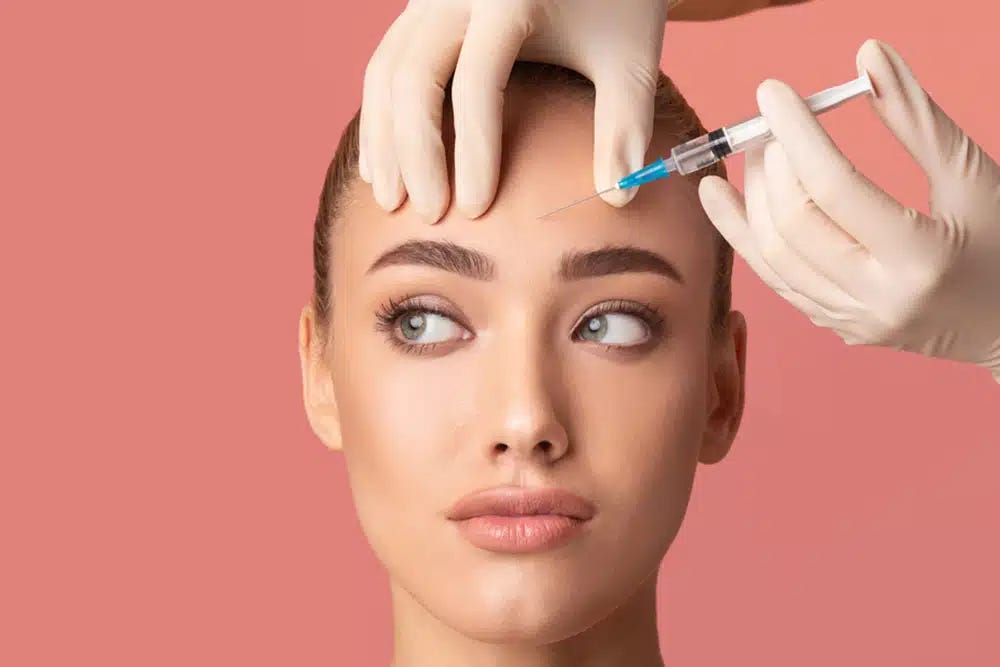
For decades now, we’ve treated the face according to a theory of aging that we would consider insane for the rest of the body.
The theory goes like this: movement creates lines, therefore the path to youthfulness is to stop moving.
And so millions of people inject a paralysis toxin into their facial muscles in order to prevent those muscles from being used.
Imagine applying this logic elsewhere: Perhaps if we paralyzed the abs, the stomach skin would remain smoother. Or if we immobilized the knees, the skin around the joints would stop creasing. Or maybe we should prevent arm movement, and elbows would remain youthful.
Nobody believes this, because everyone intuitively understands how youthful tissue is actually maintained. Hard cardio, resistance training, movement, protein, circulation, metabolic demand, continual repair. Use keeps tissue alive. Exercise keeps muscles firm. Vascularization remains rich. The body stays responsive, oxygenated, metabolically active.
We do not preserve youthfulness in the body through disuse. In every other domain, chronic immobilization leads toward atrophy, reduced tone, weaker tissue, reduced circulation, and a kind of biological dullness.
And yet somehow, for the face — the tissue humans care most about aesthetically — we decided the opposite rules apply.
The face is not wallpaper. It is living tissue packed with musculature, vasculature, fascia, nerves, connective tissue, and highly specialized expressive systems. Humans are probably the most facially expressive species on Earth. We evolved enormous expressive bandwidth because social signaling matters enormously for our species.
Smiling, laughing, reacting, widening the eyes, tightening the lips, grimacing, expressing concern, amusement, disbelief — these are not accidental byproducts of the face. They are core biological functions of the face.
And those expressions are themselves a kind of exercise. They recruit muscles throughout the cheeks, jaw, neck, brow, scalp, and around the eyes. They increase blood flow. They continually engage the tissue mechanically and metabolically.
What’s especially strange is that people already understand this principle perfectly well for the body. Youthful bodies come from engagement with the world. Nobody expects vibrant tissue to emerge from decades of paralysis and underuse.
And yet Botox’s entire premise is essentially: “Your face keeps aging because you keep using it.”
That should sound biologically bizarre.
In this light, it occurred to me that there should probably be some kind of facial exercise movement built around the opposite philosophy. And indeed there is: Face Yoga. The idea is exactly what it sounds like — facial poses and held expressions intended to engage facial musculature.
That’s probably directionally correct. But just as yoga alone is usually insufficient to create a highly firm, vascularized, athletic body, I doubt gentle held facial poses alone are enough to produce the most youthful, metabolically vibrant face either.
What may matter more is dynamic, emotionally rich facial engagement. Real expressions. Real social interaction. Real emotional responsiveness. Face CrossFit.
And probably hard whole-body exercise too. During brutal workouts, the face is heavily recruited. Grimacing under strain. Jaw clenching. Nostril flaring. Deep breathing recruitment. Neck stabilization. Orbital tightening around the eyes. Forehead contraction. Intense autonomic arousal and blood flow. People after hard exercise often look flushed, oxygenated, vascularized, alive.
That is part of what youthfulness actually is: living tissue actively engaged with the world, rather than tissue being chemically instructed not to move.
Your face was designed to move. Exercise it. And certainly don’t Botox it!